Showing posts with label Space tourist. Show all posts

Wednesday, May 21, 2008

Cover Story

Wanted: an Emirati space tourist
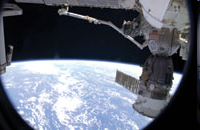
image

ANY Emirati with $35 million to spare is being encouraged by Space Adventures to contact the orbital space flight company to join them on a mission to the International Space Station (ISS).

CEO and president of Space Adventures Eric Anderson, who was in Dubai for the recent WTTC Summit, told TTN’s in an exclusive interview that the company would particularly welcome an Emirati recruit to go orbital.

“The kind of astronaut I’m looking for is someone who would go into orbit – spend two weeks on the International Space Station,” said Anderson.

“They would have to have a reasonable level of fitness; they will have to find a little bit of time in their schedule because there are about 12 to 14 weeks of training required.”

Space Adventures is targeting private individuals, business people, and has spoken to organisations and sectors of the government while here. “We are just starting discussions about it now,” said Anderson.

So far the company has had five private citizens visit the ISS, and the sixth, video game programmer and designer and Texas resident Richard Garriott, is due to take off from the steppes of the Kazakhstan space port on October 12.

“Garriott is unique as he is going to be the world’s second generation astronaut - his father is Owen Garriott is a former NASA astronaut,” he said.

Although the focus of the company is on orbital flights, they also offer sub-orbital flights costing around $200,000 for the blast. Rockets boost passengers 100 kilometres up to where space begins. After the engines shutdown, participants experience up to five minutes of continuous weightlessness, and can see Earth below.

Other space companies – Virgin Galactic for example, have signed up five Emiratis so far for sub-orbital flights. UAE national Adnan Al Maimani, a Space Adventures client, was the first to sign up and is on a waiting list for a sub-orbital flight.

“Sub-orbital is really the edge of an orbital flight. We think that if someone is going to pay $200,000 for a few minutes on the edge of space, we would love to see more people doing it. If someone is keen to go that far they possibly really want to go to the space station. It’s a teaser. So we are very supportive of sub orbital flights and we don’t really think of others as opposition,” Anderson said.

Space Adventures recently acquired another company called Zero Gravity. “We have come to realise over the last couple of years that this is the best space experience for the rest of us, so to speak. The Zero Gravity is a $4,000 per person space experience. It is not a space flight per se, but it is a two hour flight in a specially outfitted Boeing 727 during which participants have short periods of weightlessness,” he said.

“Zero gravity flights are really a much better option than sub-orbital because you get more weightlessness and you are in an FAA approved aircraft. It is also a lot less expensive.”

Another advantage of zero gravity flights was that these fly out of regular airports anywhere in the world. So what if we want to bring it to Dubai?

“Absolutely, we could bring it right here. We would have to have a group of committed customers before we did that, but we may well do that at some point,” he said.

The United States, Russia, Japan, Canada and Europe share the ISS international project. Construction started in November 1998, and is scheduled for completion in 2010. It orbits at an average altitude of 354 kilometres at an inclination of 51.6 degrees to the equator and at 17,000 miles an hour.

by Cheryl Mandy

Wednesday, February 20, 2008

An interview with Richard Garriott

An interview with Richard Garriott
by Sam Dinkin

image

Space tourist Richard Garriott during a zero-g airplane flight last year. Garriott is scheduled to fly to the ISS this fall. (credit: richardinspace.com)

[Editor’s note: the following is an edited version of an email interview between Sam Dinkin and Richard Garriott, a developer of computer games like Tabula Rasa who is currently in Russia training to be the next commercial visitor to the International Space Station this fall.]
Mind and skills

Sam Dinkin, The Space Review (TSR): Are you finding some parallels in your final training with the player experience in Tabula Rasa (TR)?

Richard Garriott: Interesting you should ask! There are definitely some overlaps! Learning to use new high tech devices in an alien environment, in an alien language…

TSR: Is it easier to learn Logos [an alien language in TR] or Russian?

Garriott: Logos was designed to be easy to read, no question it is far easier!

TSR: Are you wishing there was a way to skip the astronaut training the way you can skip boot camp if you want in TR?

Garriott: Not at all! Boot camp here is part of the experience I am thrilled to be part of!

TSR: Have any funny training anecdotes?

Garriott: How I long for the massive variety of food available in the USA, or even Moscow. Here in Star City, we eat at the military Flight Cantina. While the food is tasty enough, it appears we are having pretty much the same thing at every meal of every day!


Crafting supplies

TSR: Did you bring some nucleotides, nano mechs, and a TR “crafting station” to do your scientific research on the International Space Station (ISS)?

Garriott: Close! I will be bringing a variety of proteins up to the ISS to crystallize in microgravity, to then return to the X-ray diffraction “station” back in Huntsville.

TSR: Can you give a technical description of the experiments you’re doing?

Garriott: I have many, but the most interesting involves protein crystal growth. Getting an accurate atomic structure for protein molecules is very valuable for science and medicine. One of the best ways to image a protein molecule is to first crystallize it and then use a process called x-ray diffraction to see what its shape is. However, crystals grown on the ground are generally impure due to tiny convection currents in the fluid they are crystallizing in. In space there are no such currents. We believe we have a novel and, more importantly, better way to do this than has been tried before. If this works out, we can demonstrate a process of great potential commercial value!

TSR: Anything else cool that you’re bringing?

Garriott: In addition to many more commercial and educational activities, I will be doing the first art show in space featuring the art of my mother, who inspired half the brain that was required for me to be in the high-tech art business.


Body

TSR: How does the weather there compare to Austin’s 25°C and sunny today?

Garriott: Cold for me, warm by local standards. It snows almost exactly every other day!

TSR: How’s the food compared to Uchi [a Japanese restaurant in Austin]?

Garriott: Uchi, oh how I miss you! Tyson Cole, please send me a care package! Hudson’s, Salt Lick, Jeffries… yum. While the food in Moscow is great, out here I am on a military base, and while the food is good quality, it lacks variation, and Austin has some of the best cuisine in the world, as you know.

TSR: Are you doing a special Austin meal for the crew while you are there?

Garriott: Actually I do plan to throw an “event” later in the year, but I have to figure out how to pull it off. An interactive event, as I am known for in Austin, would be fun to do here!

TSR: Were you able to paint your space suit a custom color like you can in TR?

Garriott: Actually, yes! There is a gentleman I have heard that has made everyone’s space suit since Gagarin. I hear that when you meet with him, it’s sort of like a custom fashion designer session, and you get to select colors, style, and anything else you want!

TSR: What do you think the main environmental difference will be on the ISS?

Garriott: Beyond the obvious like weightlessness and being totally enclosed, due to the deadly vacuum outside the hull, orientation will be the main variation I expect. The ISS is now the scale of a 747, and has modules extending in all directions. Floors, ceilings and walls all have windows, equipment racks and storage lockers and bags. Since there is no up or down in pretty much every sense of the words, I think that will be an interesting adjustment.


Backpack

TSR: How much has the fall in the dollar vs. the ruble raised the price from what Dennis Tito paid? Did you bring a backpack full of $100 bills?

Garriott: Actually the unfavorable changes in exchange rates have significantly affected the cost of doing this trip!

TSR: It will be about $75 per second of zero G for you; wouldn’t it be cheaper to float in neutral buoyancy in Austin?

Garriott: Yes, and as much fun as floating in Lake Travis would be (and not a bad neutral buoyancy event either) something important would be different.

TSR: What does it cost to buy a candy bar in space, $1,200 per ounce? Is everything in space like a rare TR “purple item”?

Garriott: Oh, yes!


Spirit

TSR: How does it feel to be following your father into space to become the first second-generation astronaut?

Garriott: Great! It has also become a great opportunity to work closely with my father, which is a great bonding time for us as adults!

TSR: Once you have achieved your life’s ambition, what heights will you scale next? How about a flight around the Moon?

Garriott: There is still a lot of “exploring” to do here on Earth, and while I would love to go to the Moon, I will likely be happy with my time in orbit for the time being!

TSR: In the opening sequence of TR, people were oblivious, then the world changed radically over night. Does an asteroid strike or climate change worry you?


Garriott: While some day an asteroid will in fact hit the earth, in any given year the probability is so slight that it is not something to get too excited about other than to start developing the technology for the eventual day that it does arrive. Climate change, however, is very real, and will absolutely affect millions upon millions of people well within our life times. It is not that the world will end, but at the very least, many already impoverished areas will be further decimated, and the economic shifts could affect us dramatically!

TSR: Can you sum up the key theme of what you want the world to learn from your flight?

Garriott: I hope to learn how to better make space a viable reality for everyone. To do that, I think it needs to be shown that the investment in space is worth it. That is why I hope that at least some of my experiments pay off. If even one does, it will mean that there are more that can be done, and thus justify further flights by private individuals and companies.

Audley Travel boss books space flight with Virgin Galactic

Audley Travel boss Craig Burkinshaw (pictured below) will experience the trip of a lifetime when he boards a Virgin Galactic spaceship.

The Oxfordshire-based businessman, who heads up the specialist tour operator, has spent £100,000 to be one of the first space tourists.

image

He said: “It’s a lot of money but I want to be among the first. I’ve done skydiving many times and travelled all round the globe, but this is going to be fantastic. I want to see the Earth the way astronauts see it.”

Launch and landing points will be in New Mexico and the journey will last an estimated 150 minutes. On each trip there will be just six passengers and the spaceship will reach a height of 100km, just past the Earth’s atmosphere.

source

Sunday, January 13, 2008

The first Indian space tourist

spacet248

Ahmedabad: A 21-year-old science graduate from Ahmedabad has won the `Bindaas Go to Space Contest' on a TV channel. And with that he will also become the first Indian space tourist.


Meet Hardik Gajjar – he has own won the `Bindaas Go to Space Contest' on a TV channel.


Congratulatory messages are pouring in ever since news spread that he's won a TV channel contest to secure a chance to go into space.

His passion for song, dance, humour and mimicry has won him several awards. But this surely is the highest honour that he could have ever imagined.

Asked in the initial rounds of the contest why he wants to go into space, Hardik said, “I told them its because I wanted to know how one answers nature's call in space."

But the contest to become the first Indian space tourist was not easy. Seven finalists from across the country battled it out, testing their wit, general knowledge and ability to adapt to different situations.

Hardik, who will be formally declared winner on Sunday, will train at NASA. The rocket plane XP commandeered by former NASA astronaut John Herrington will take him into space next year. Hardik is still at a loss of words to describe his luck.

“I have no words to express myself, may be my expressions can, " Hardik added.

And the family is overjoyed as well.

Hardik's sister Amita said, "We are all excited and happy. Its great that he will go into space."

Hardik’s feat is not just about winning a talent competition. In doing so, he has come one of a billion Indians to be able to visit space.

Source: ibnlive.com

Monday, December 24, 2007

From CEO to Space Tourist

The software guru decided to see if he had the 'right stuff.'

Touchdown: Simonyi after his space-station visit


By Charles Simonyi

How does one decide to visit space? Until recently, no one had faced such a decision. Rare people with the "right stuff" could dedicate their lives to becoming astronauts and cosmonauts and compete for the crew assignments, but the decision of who would fly always rested, rightfully, with the respective space organizations. Then along came Eric Anderson, a young, visionary aerospace engineer who cofounded Space Adventures, making it possible for nonastronauts to buy "taxi" seats aboard Russian spacecraft and travel to the International Space Station. Three cheers for Eric—and hats off to Dennis Tito, the California businessman who in 2001 became Space Adventures' first Spaceflight Participant—or, as most people call it, "space tourist."

I was just an earthbound tourist, visiting Baikonur, the Russian spaceport, when I met Eric in 2004. I was amazed by the openness of the Russian space program—we could practically touch the fully fueled rocket on the launchpad as we saw the cosmonauts off to space. I was even more amazed when Eric, ever so gently, suggested that one day I might want to be on the departure platform where the cosmonauts were standing.

The trip would cost $25 million, which I considered money well spent for the cash-strapped Russian space program. I was intrigued enough to make the first exploratory steps and deal with the uncertainties: What about my health? (I'm 59.) Was I strong enough, physically and mentally, for spaceflight? The good news is that for Spaceflight Participants, the standards aren't as strict as they are for the professionals. But even those minimum standards are too high for most of us. And, frankly, the space doctors have not had much experience working with people without the "right stuff" to know what the real minimums are. I had to visit more than 50 doctors, including psychiatrists, some American and some Russian.


One of the strangest tests was the "vestibular chair," where I had to sit with eyes closed in a rotating seat and bob my head in a steady rhythm. This creates some unusual sensations in the inner ear that are thought by the Russians to be similar to the "space sickness" many spacefarers experience during their first days in orbit. I did not like the chair at all at the time, and although I smiled broadly, inside I was unsure if I could take much more.

To my surprise I kept passing the tests, even the unpleasant ones, and one day in Moscow I was declared fit for "special training." Eric was the first to congratulate me. He also said that, as opposed to what we had planned, the Russians wanted me to enter training as soon as possible and fly on the next spacecraft. I had to decide then and there. It actually wasn't as hard as it seems in the abstract. I felt incredibly lucky and privileged just to have been asked. The answer had to be yes, come what may.

Canceling all appointments for the next 10 months and moving into a dorm room on the Russian military base where cosmonauts are trained was quite a change for me. (After spending two decades at Microsoft, where I oversaw the creation of Word and Excel, I cofounded Intentional Software Corp. in 2002.) I had tutors in many interesting subjects, including the wonderful Russian language. I ate at the officers' mess, where one of the regular dishes was called, simply, myaso—that is, meat. I had a regular exercise program and swam more than I ever have before. I made lots of new friends, including many American astronauts who also train there.

There were many tests, each one harder and harder. I learned how to don and doff my spacesuit even while wearing a gas mask against fire. I spent two hours motionless in the suit in a vacuum chamber. I was spun around in a giant centrifuge to experience the G-loads of the rocket. I was flown in a transport plane to exercise in a state of weightlessness.

Finally, launch day arrived: April 7, 2007. My Russian crewmates and I met with our families—speaking through glass, since we were in quarantine (lest we carry some bugs to the space station). The launch preparation itself is full of traditions: for example, before we climbed the stairs to the elevator, the chief designer himself kicked us firmly in the behind to get us going. Once ensconced in the capsule, we could feel a powerful quiet and peace, which ended with the rumble of the launch. In just eight minutes we were in orbit, weightless.

The window blinds remained drawn for the first few hours: just seeing the Earth go by below could make us sick. But my training worked well. I did not get spacesick at all: any unease I felt reminded me of the chair and how I could tolerate it.


The arrival to the space station at sunset, when the most incredible colors appear, was the high point of my trip. Framed by the empty blackness of the sky and the brilliant blue of Earth, the first permanently settled outpost of humanity in space is an incredible view—at once unexpected and inviting.

Working in space for the next two weeks and watching the Earth from that vantage point filled me with a new sense of hope and pride. From our low orbit, the Earth looked like the most beautiful blue sky I have ever seen—it is big, it is peaceful and it is adorned with white clouds. Traveling around the globe over the years, I have seen many beautiful places. But only as a space tourist did I discover just how beautiful the world truly is.

© 2007 Newsweek, Inc.

Monday, September 24, 2007

Space tourist tells tales of rockets, diapers

SAN FRANCISCO--Knowing the feeling of weightlessness...enjoying NASA-issued shrimp cocktail...being called "space cowboy" by Russian cosmonauts. Cost: $20 million.

The experience of flying to the International Space Station: Priceless.

That may be the easiest way to sum up Greg Olsen's 10-day tour into orbit with the Russian Space Agency, as the third private citizen ever to make the trip. Olsen spoke about his October 2005 travels at the annual Society of Information Design luncheon, held here Wednesday.

"It was absolutely worth it," Olsen said to a roomful of scientists, after describing some of the sillier highlights, like flying through the shuttle or snacking on a floating Slim Jim.

On a more technical note, Olsen trained for five months, or 900 hours, in Moscow before rocketing roughly 200 miles into outer space, orbiting the Earth for two days, and then finally docking at the ISS for eight more days. In all, Olsen, who was 60 when the voyage launched, orbited the Earth 150 times before heading back to Russia. That's possible because the ISS travels at about 17,000 miles per hour, completing an orbit around the Earth every 90 minutes.

"The only way for someone like me to go up there is through the Russian Soyuz rocket," he said, adding: "It's quite an experience."

If private industry has its way, Olsen will soon be joined by many other people out to expand the idea of what it means to travel abroad. Entrepreneurs like Elon Musk are building businesses around private space travel, and NASA itself is hosting contests to encourage companies and academics to build next-generation technology for commercial space flight.

A New Jersey resident, Olsen got the idea for his trip one morning in 2003 while reading the paper at a local Starbucks. Space Adventures--a U.S.-based space-travel agency contracted with Russia--had sent the first two private citizens to ISS, according to a news article that day. Olsen, who was recently flush with cash from the sale of his optical technology company Epitaxx to a telecom operator, decided it was a good time to pursue a long-held dream.

But his plans were temporarily thwarted in 2004, when Russian doctors found a black spot on his lung during routine X-rays before training was to start. After working with doctors for nine months, he was re-admitted to the program.

"People often ask me what I learned and I tell them, 'Don't give up,'" said Olsen, who now lectures at schools around the country, encouraging kids to study math and science. "I failed trigonometry in high school and eventually went on to get my Ph.D."

Olsen described his five-month training in Moscow as a cross between college and military boot camp, but for Russian cosmonauts. Training included a two-mile run every morning, Russian language classes and exams, fire-fighting drills and zero-gravity training, in which he practiced free-falling for 30 seconds at a time.

Olsen traveled with two astronauts, a Russian and an American, but he still had to speak the language, which was the hardest part of the training, he said. At liftoff the three men had waited two and half hours in cramped conditions, and then flew another four-and-a-half hours before having the ability to move around. "We all wore Huggies diapers, and we all had to use them, too."

In the Soyuz, the crew made 34 orbits before docking at the ISS, where there were two other astronauts manning the station. The ISS is fairly close to Earth at 226 miles in outer space, and it measures about 200 feet long. Olsen likened his experience in the station to a long and weightless camping trip. No showers, no sinks, no running water. The crew uses wet wipes to clean up and an onboard vacuum to urinate. The crew straps into sleeping bags to sleep upright.

When Olsen landed, he needed help to stand and walk because of effects to the vestibular system in zero gravity and the shaky re-entry to the Earth's atmosphere. It took him three or four days to regain normalcy.

It also took him some time to regain his normal height. He was 1 inch taller for a day, thanks to weightless effects that cause the vertebrae to relax and stretch.

Friday, September 7, 2007

Space tourist Simonyi's station souvenirs


April 9, 2007 — Charles Simonyi has his passport with him, ready for his arrival aboard the International Space Station (ISS) today.

"Just to get it stamped, not that I think you should have to have a passport to go to space," Simonyi, a former Microsoft software developer, told collectSPACE before his launch this past Saturday.

The government-issued document is among Simonyi's small stash of souvenirs and personal items that he has packed for his 10-day stay on the orbiting outpost.

As the fifth space tourist, Simonyi will spend his time conducting experiments for international space agencies including the European Space Agency, the Japanese Aerospace Exploration Agency and the Hungarian Space Office. In his free time, the American billionaire plans to blog about his experience on his website, communicate with students on the ground and take many photographs.

"I am bringing up a lot of camera equipment and a lot of blank tapes and cassettes," said Simonyi, who has also brought an MP3 player with over 1,600 tracks loaded "all legally" with classical and rock music.

He also plans to establish the station's first reading room.

"I am taking some books. I say I am starting a library — there are books up there, but anyway I'm the first one to say it should be a library, so I am taking up a couple of books." The books he is bringing are Faust by Johanne Wolfgang von Goethe and The Moon is a Harsh Mistress by Robert Heinlein.

Delivering enrichment of a different type, Simonyi also carries a six-course meal chosen by close friend Martha Stewart and prepared by French chef Alain Ducasse. It includes roasted quail, duck breast confit and shredded chicken parmentier.

History and heritage


As a high school student in Budapest, Hungary, Simonyi first learned to program computers on the Soviet Ural II. Moving to the U.S. to attend the University of California at Berkeley and then earning a doctorate at Stanford, he began working in 1972 at the Xerox Corporation's Palo Alto Research Center (PARC), where he created Bravo, the first WYSIWYG (what-you-see-is-what-you-get) text editor.

From there, Simonyi joined Microsoft in 1981, leading the teams that developed Word and Excel. Today, he is the president and CEO of Intentional Software Corporation, a company he founded in 2002 to focus on improving ways in which organizations write software.

In a nod to his nation of birth, Simonyi has with him three contest-winning drawings created by Hungarian children. Held by the Hungarian Red Cross, the contest called for children in over 50 schools across the country to submit drawings that depict the organization helping people on and off the planet. Simonyi will use the ISS's ink stamp to mark the drawings as having been on-board, and will return the pictures to the artists during a ceremony to be held after his flight.

Simonyi said in a statement that he was "honored to support the Hungarian Red Cross and to involve children from Hungary and around the world in the wonder of space travel." Using amateur radio, Simonyi also plans to speak directly with high school students from aboard the station in three events across the United States.

Symbolizing his history with computer software, which ultimately led him to being able to afford the $25 million trip to space, Simonyi has brought a Ural II paper tape. "To remind me where it all started," Simonyi said of the memento.

Simonyi's heritage and history are also represented by the design of his personal mission insignia. The diamond shaped patch combines an outer rectangle of Hungarian, Russian and American flags, and an inner circle that has depictions of the station and Soyuz spacecraft inside a constellation of stars.

"It became evident that we needed to have a patch, so I was trying to think of what would be the good motives that you would want to show on the patch and of course, what might be the motto for the flight... it became 'From Ideas to Reality'," Simonyi described to collectSPACE.

"'Reality' of course, was being there, the space station, Soyuz and so on. We needed an illustration for an 'idea'. In a number of different ways, the simplest idea is the theorem of Pythagoras. How to represent the theorem of Pythagoras?" Simonyi asked rhetorically of the relation between three sides of a triangle in geometry.

"We had a couple of brainstorms and it went through a couple of different iterations. It was first a cutout of the shape of the theorem of Pythagoras... [with] the reality behind it. That didn't work graphically."

"Somehow the idea of a constellation that looks like the theorem [was suggested], which is a fascinating idea by itself because there is no such thing. Imagine if there would be, that would be quite remarkable! But no, we imagined a theorem in the form of a constellation, it was an interesting thought and it worked graphically very well, so that's it. And then of course, the background of flags is pretty important, too," explained Simonyi.

In addition to the patches sewn on his space- and flight- suits, Simonyi took with him a small supply of emblems as well as U.S. and Hungarian flags he wrote in his blog "will make excellent gifts some day to museums at home in Seattle and in Hungary."

More to add to his collection

Even before applying to fly in space, Simonyi collected space artifacts as a hobby.

"I have a few pieces of clothing from early Russian [cosmonauts]. I have Komarov's sweatpants, or at least sweatpants that are said to have belonged to Komarov, things like that, but mostly written materials," Simonyi revealed in his interview with collectSPACE.

"I have a few checklists. For example, I have several of the checklists that [Apollo 11 moonwalker] Buzz Aldrin has been selling. I love documentation, checklists or manuals; all the Apollo manuals, the Gemini manuals, all the manuals."

Simonyi isn't the only collector coming on-board the ISS when Soyuz TMA-10 docks just after 2:00 p.m. CDT this afternoon. One of his two traveling crew mates, Fyodor Yurchikhin collects stamps, that is when he has the time.

"I collect stamps," Yurchikhin proudly told collectSPACE before his launch. "I cannot tell you that I collect now the stamps because I should have enough free time, I do not have enough free time. Now, my collection waits for me."

He may not have stamps aboard, but Yurchikhin, who is set to take over command of the station, has something just as, if not more, meaningful along with him: a stuffed toy dog.

"My small dog is with me because this dog lives with me I think more than 30 years from my high school because my favorite teacher give me this toy. It's like talisman for me. Everywhere in my travels this dog is with me."

Indeed, this isn't the first time the toy dog has traveled to space. It accompanied Yurchikhin on his first mission in 2002 with the crew of STS-112 on space shuttle Atlantis.


Like his fellow cosmonaut, Soyuz TMA-10 commander Oleg Kotov also brought a toy, a small black cat named "Dimlar," after his two children Dima and Lara. The doll could be seen hanging in the Soyuz cabin during launch.

Yurchikhin and Kotov will remain on the ISS, replacing Michael Lopez-Alegria and Mikhail Tyurin, who will return to Earth with Simonyi on April 20.